


When people think of physical therapy, they often picture post-injury rehabilitation or recovery after surgery. While that’s certainly an essential part of what we do, that view is limited — especially in the world of high-performance sports.
For elite and developing athletes, physical therapy isn’t just about getting back in the game. It’s about consistently performing at your best and extending your athletic career as long and as well as possible.
Physical therapy bridges the gap between rehabilitation, performance optimization, and injury prevention. In today’s era of sports science, physical therapy is no longer reactive — it’s proactive.
1. Physical Therapy as Performance Medicine
Modern physical therapy for athletes goes far beyond the treatment table. It’s a dynamic integration of biomechanics, movement science, strength and endurance training, and the specific demands of each sport. A good sports physical therapist understands the unique requirements of each discipline and tailors their interventions to optimize the athlete’s biomechanics, mobility, and strength.
For example, a physical therapist should be able to help a pitcher improve performance by refining shoulder mechanics or correcting imbalances caused by repetitive overload.
A physical therapist specializing in sports should have the following expertise:
- Analyzing movement patterns and neuromuscular imbalances
- Identifying asymmetries or compensations
- Prescribing corrective exercises to optimize mobility, stability, and power transfer
2. Injury Prevention
The best injury is the one that never happens. Physical therapists use evidence-based assessment tools such as the FMS (Functional Movement Screen), the Y-Balance Test, and sport-specific kinetic chain analysis to detect warning signs before tears, sprains, or fractures appear.
Many athletes are surprised to learn that:
- 70% of ACL injuries are non-contact, and many stem from biomechanical deficits or fatigue.
- Tendinopathies (Achilles, patellar, rotator cuff) can often be prevented with progressive loading and proper recovery.
- Stress fractures in endurance sports are frequently linked to poor running mechanics, training load errors, or nutritional deficits — all things a physical therapist can identify and address.
Building a preventive program tailored to the athlete’s sport and training cycle not only reduces injury risk but also improves daily recovery from microtrauma.
Prevention isn’t passive rest — it’s active strategy. Consistency in training turns out to be the most important factor for progress in any sport.
3. Return to Sport
Post-injury or post-surgical rehabilitation isn’t just about eliminating pain — it’s about regaining confidence, explosiveness, and body control. This is where physical therapists truly demonstrate and highlight the importance of their role in athletic performance.
Modern rehabilitation is functional, progressive, and sport-specific. It focuses on rebuilding strength, restoring neuromuscular control, and intelligently reintroducing the demands of the sport. High-level athletes don’t just want to get back to playing — they want to compete with confidence.
A return-to-sport protocol guided by a DPT includes:
- Progressively restoring load tolerance
- Reinforcing correct movement patterns
- Integrating cognitive-motor exercises (reaction time, direction changes, sport-specific movements) to simulate the competitive environment
4. Long-Term Athletic Development
In young and developing athletes, physical therapy plays a key role in building lasting movement habits. Many future injuries originate from poorly formed patterns established in the early stages of training.
The physical therapist works with coaches and parents to:
- Ensure safe progression of training loads
- Develop foundational mobility and stability
- Encourage proper recovery strategies (sleep, nutrition, soft tissue work)
This not only helps prevent injuries but also maximizes performance potential during the most critical stages of physical and neuromotor development.
5. Recovery Optimization
Recovery isn’t simply rest — it’s a skill. It’s where adaptations truly happen. The physical therapist guides this process with manual therapy, soft tissue work, mobility techniques, and recovery education.
Some key tools include:
- Myofascial release and manual therapy
- Joint mobilizations
- Active recovery session planning
- Complementary therapies such as red light therapy, cupping, dry needling, and more
- Education on hydration, nutrition, and sleep quality
Regular physical therapy sessions help offload accumulated stress and prepare the body to train at a higher quality. This support also helps manage training loads, improve recovery times, and prevent overtraining or burnout — whether you’re a world-class athlete or someone just starting out. The smartest athletes don’t just train hard — they train strategically. Including a physical therapist as part of the performance team can be the difference between stagnation and evolution, between injury and your next personal best.
Athletic success doesn’t happen by luck. It’s built with precision, preparation, and proactive care. And physical therapy is the foundation that allows talent to flourish.
Here’s a sample of what, in my opinion as a physical therapist, are 5 exercises every runner should be doing in the gym.
These aren’t random exercises — they’re chosen for their direct transfer to running, their ability to prevent common injuries, and their role in optimizing movement efficiency.
1. Single-Leg Romanian Deadlift Strengthens the hamstrings and glutes while improving single-leg balance. It helps with better control during the midstance phase of the stride and reduces the risk of overuse injuries.

2. Bulgarian Split Squat Running is a unilateral movement, and this exercise strengthens the legs in a running-specific position. It improves stride efficiency, hip control, and overall power.

3. Poliquin Step-Down An excellent eccentric exercise for the quads that activates the VMO, improves knee alignment, and helps prevent issues like runner’s knee.

4. Sled Push and Reverse Drag These develop explosive lower-body strength and fortify the knees without joint impact. Reverse drags, in particular, help bulletproof the quads and improve long-term knee health.
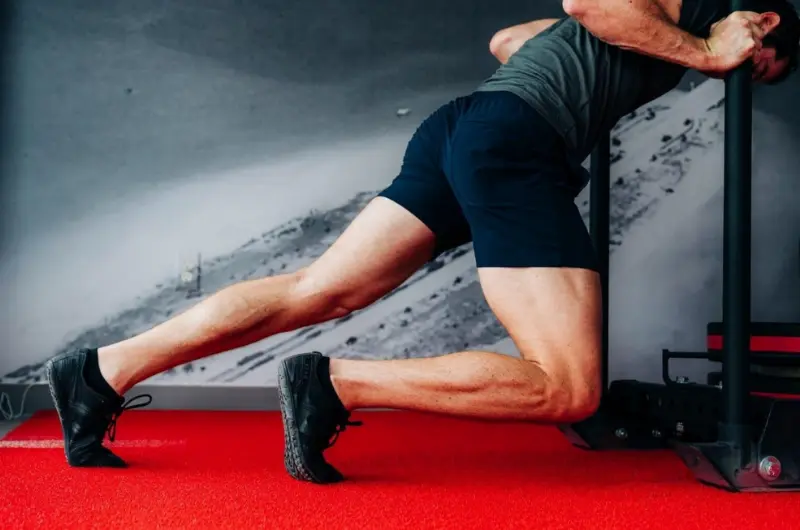
5. Tibialis Anterior Raises (Tib Raises) An underrated but very important movement. It strengthens the tibialis anterior muscle, improves dorsiflexion, and helps prevent injuries like shin splints.

If you want to run faster, longer, and without constant injuries, start incorporating these exercises into your weekly routine. A strong runner is a durable runner.
